Your automatic gate is probably one of the hardest-working pieces of equipment around your home. It opens when you leave for work, closes when the kids come home, and quietly helps keep your property secure.
Until one morning, it doesn’t.
Here’s the thing: most homeowners only think about their gate motor when something goes wrong. Yet a little preventative care can make a real difference.
When it comes to gate motor maintenance in Cape Town, homeowners face some unique challenges. Winter rain, coastal moisture, windblown sand and everyday wear can all affect automatic gate systems.
Fortunately, keeping your gate in good condition doesn’t need to be complicated.
Let’s explore eight practical maintenance checks that can help you avoid unnecessary breakdowns and expensive repairs.
Why Regular Gate Motor Maintenance Matters
Think of your automatic gate like your car. You wouldn’t expect your vehicle to run indefinitely without checking its tyres, battery or moving components.
Your gate deserves similar attention.
A well-maintained system can help:
- Prevent unexpected gate motor failures.
- Reduce unnecessary strain on mechanical components.
- Identify battery problems before they cause breakdowns.
- Maintain reliable access to your property.
- Improve the long-term performance of your automation system.
More importantly, regular inspections can identify potential safety problems before someone gets hurt.
Your 8-Point Sliding Gate Maintenance Checklist
Before starting, remember that automatic gates are powerful machines. Never work near moving components, dismantle electrical equipment or attempt adjustments while the system is energised.
Limit your DIY maintenance to safe visual inspections and accessible cleaning with the system properly isolated according to its manufacturer’s instructions.
1. Keep Your Gate Track Clean
A dirty gate track is one of the easiest problems to overlook.
Small stones, leaves, sand and garden debris can gradually accumulate along the track, creating resistance as the gate moves.
And with Cape Town’s famous southeaster blowing everything around, it’s hardly surprising!
What to check: Inspect the track for debris while the gate is stationary and safely isolated. Remove loose obstructions without placing your hands beneath the gate.
A clear track helps the wheels move freely and reduces unnecessary motor strain.
2. Inspect Gate Wheels and Guide Rollers
Gate wheels carry considerable weight. Over time, their bearings can deteriorate, rollers can wear down, and alignment problems can develop.
Listen for unusual grinding, scraping or rattling noises during normal operation.
If your gate suddenly sounds like an old shopping trolley, something probably needs attention.
Check visually for damaged wheels, uneven movement or loose guide rollers.
Leave wheel replacement and alignment adjustments to a qualified technician.
3. Check the Gate Rack and Pinion
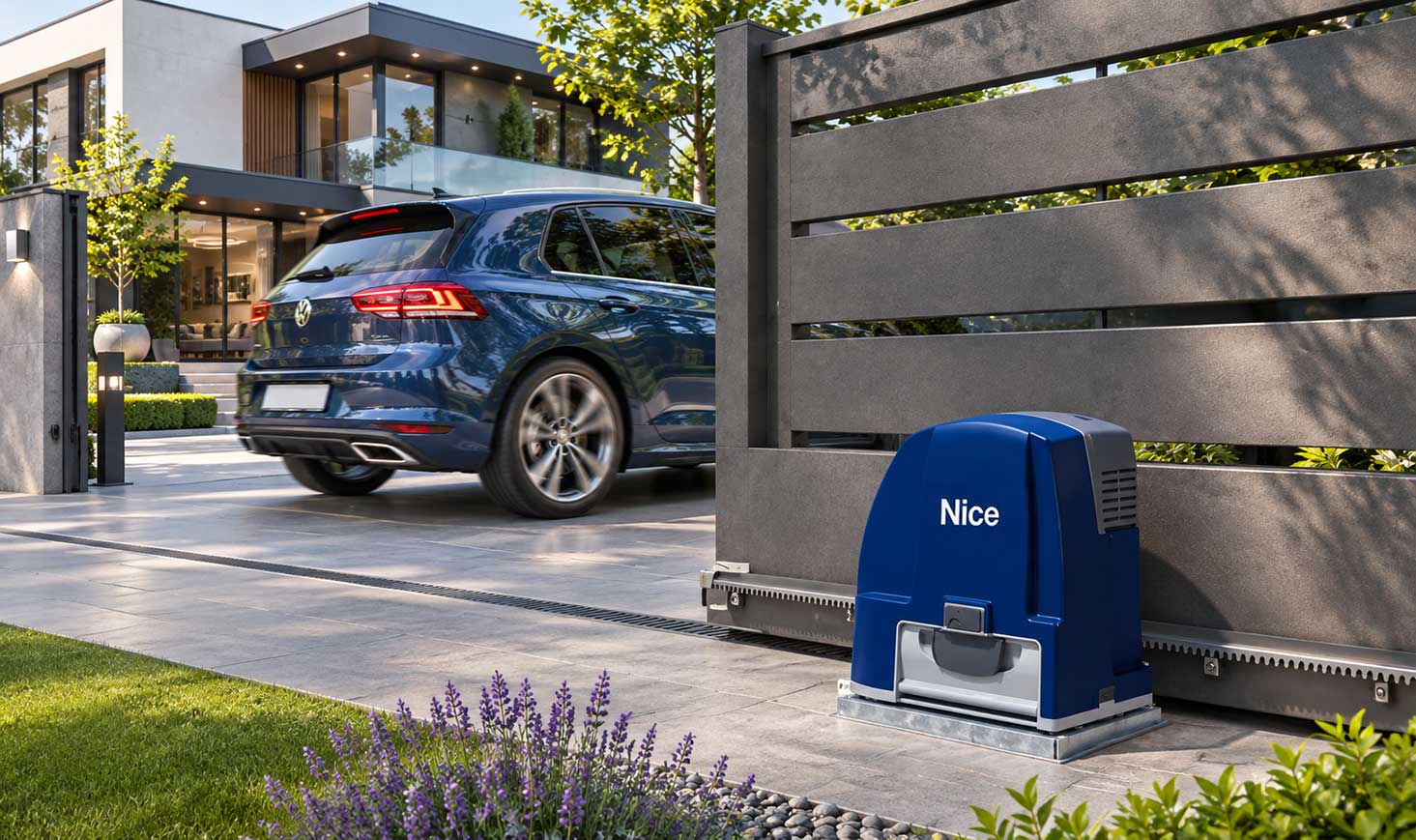
The rack is the toothed strip attached to your sliding gate. It engages with the motor’s pinion gear to create movement.
If these components become damaged or misaligned, the motor may struggle.
Look for loose rack sections, missing teeth or excessive wear.
Don’t attempt to tighten or reposition the rack without the necessary expertise.
Importantly, avoid applying grease or oil indiscriminately. Follow your motor manufacturer’s lubrication recommendations.
4. Inspect Your Gate Motor Battery
Your gate motor battery is particularly important during power interruptions.
A weak battery may cause slower movement, intermittent operation or complete failure.
Warning signs include:
- The gate moving more slowly than usual.
- The motor struggling after a power interruption.
- Low-battery warnings on the controller.
- Unpredictable opening and closing.
A professional can test both the battery and charging system.
Don’t automatically replace the battery without checking whether another electrical fault is responsible.
5. Keep Safety Beams Clean and Unobstructed
Safety beams help detect obstructions in the gate’s travel area.
Unfortunately, dust, insects, cobwebs and overgrown plants can interfere with their operation.
Gently clean accessible external sensor lenses and keep surrounding vegetation trimmed.
Never bypass safety devices or adjust their wiring yourself.
The UK Health and Safety Executive emphasises the importance of functioning safety systems and ongoing maintenance for powered gates.
6. Inspect the Motor Housing
Your gate motor housing protects important electrical and mechanical components from the elements.
However, cracked covers, damaged seals and water ingress can create problems.
This deserves particular attention during Cape Town’s wet winter months.
Check that the external housing is securely fitted and shows no obvious damage.
Watch for moisture, insect activity or unusual corrosion around the enclosure.
If you suspect water has entered the motor, arrange a professional inspection rather than opening the electrical compartment yourself.
7. Check Your Remote and Manual Release
Few things are more frustrating than a gate remote that works only when it feels like it.
If your remote becomes unreliable, its battery may need replacement. Receiver or control system problems are also possible.
Make sure you know where your gate motor’s manual release key is stored.
Ask your installer to demonstrate the correct emergency procedure for your particular motor.
Never release a gate that appears unstable or could move unexpectedly.
8. Schedule Professional Gate Motor Servicing
Even when everything seems fine, some problems remain hidden.
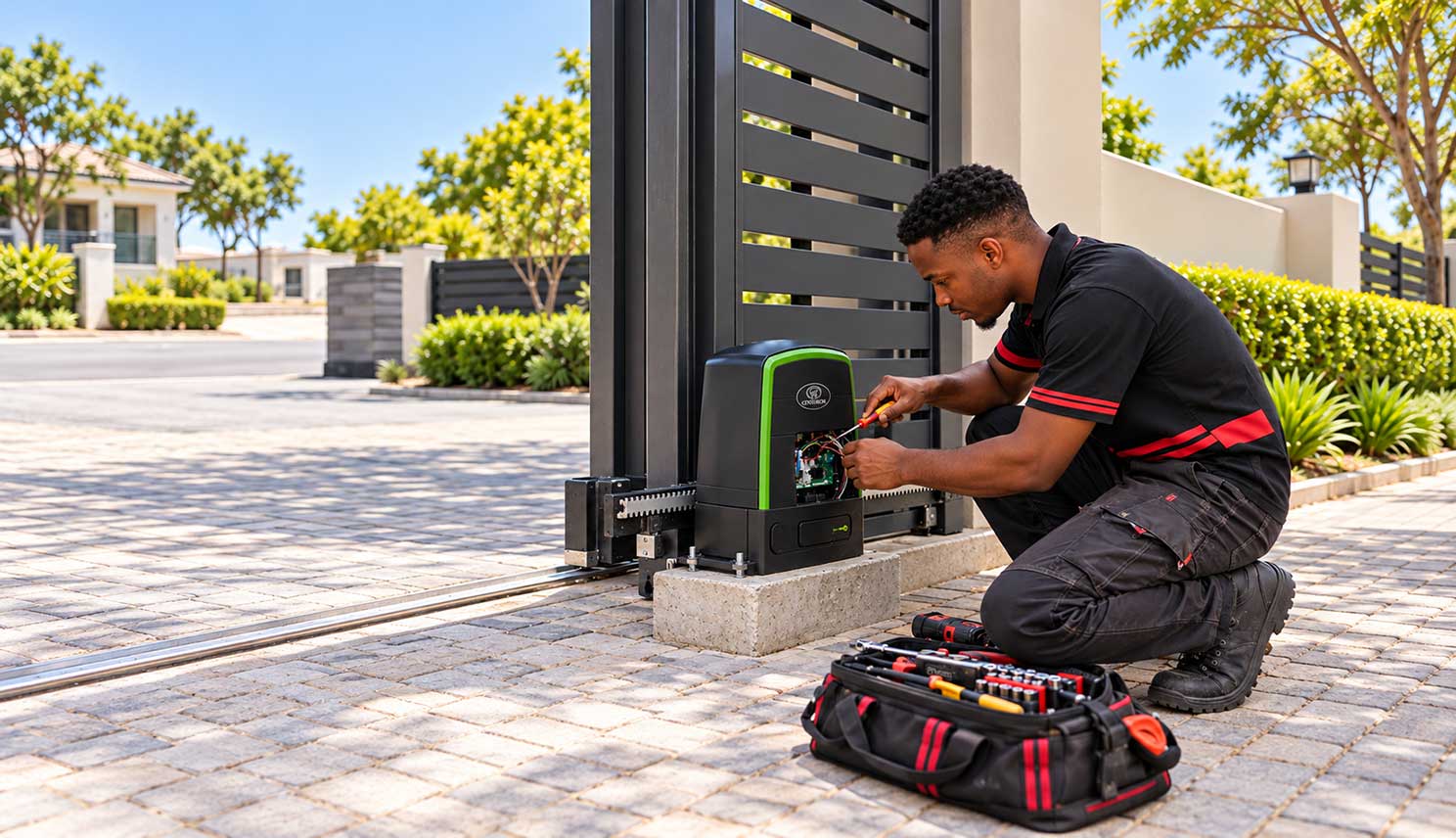
A technician can inspect electrical connections, test charging performance, examine mechanical alignment and check safety systems.
Professional gate motor maintenance and servicing helps identify developing faults before they become major repairs.
If your gate is already making unusual noises or stopping unexpectedly, consider arranging professional gate motor repairs rather than waiting for complete failure.
How Often Should a Gate Motor Be Serviced?
A sensible starting point for residential gates is a professional inspection approximately every six to twelve months, adjusted to the manufacturer’s instructions and the system’s condition.
For example, the Centurion Systems D5-Evo and D10 user guide recommends basic maintenance checks every six months.
Gates exposed to heavy usage, coastal conditions or frequent mechanical strain may require more attention.
Between services, take a few minutes each month to observe how your gate operates.
That small habit can save considerable frustration later.
Keep Your Gate Running Smoothly With Gate Motor Guru
Your automatic gate should make life easier, not create another problem on your already busy schedule.
A little attention today can help prevent an inconvenient breakdown tomorrow.
At Gate Motor Guru, we provide gate motor maintenance, repairs and installations for homeowners and businesses across Cape Town and surrounding areas.
Whether your system needs a routine service, a battery assessment or an upgrade, our team can help identify the most practical solution.
Considering a replacement system? Explore our gate motor installation services.
Give your gate the attention it deserves.
Contact Gate Motor Guru to arrange a professional inspection and keep your automatic gate operating smoothly.